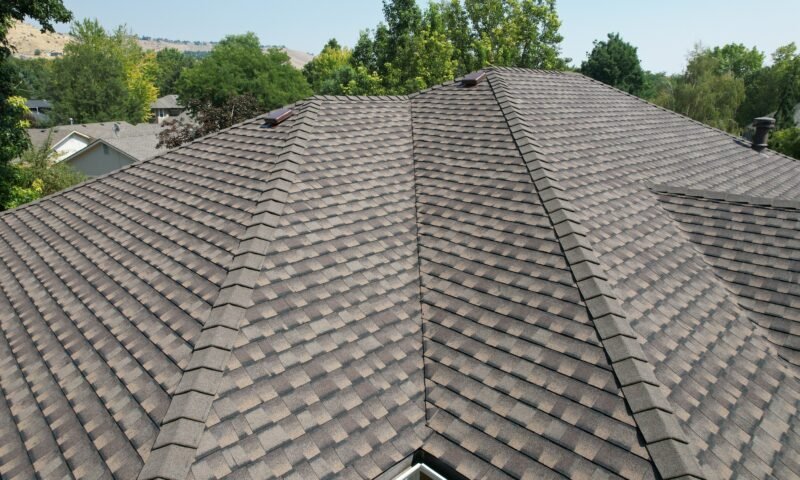
Wind damage to Boise roofs most commonly occurs during chinook wind events (gusts 40–80 mph) and summer thunderstorm downdrafts. Damage includes lifted or missing shingles, displaced ridge caps, and torn flashing. Boise Roofing Contractors provides same-day wind damage assessment and temporary securing — call (208) 545-8226 for rapid response.
Wind Damage Roof Repair in Boise Idaho — Same-Day Response
Wind is the second leading cause of residential roofing damage in Ada County after hail. Boise’s unique geography creates two distinct wind damage scenarios: the winter and spring chinook wind events that sweep down from the Rocky Mountains through the Treasure Valley, and the summer thunderstorm downdrafts that can generate localized gusts well above 60 mph. Each type of wind event creates different damage patterns on residential roofing.
Boise’s Wind Threat: Chinook Events and Thunderstorm Downdrafts
Chinook Wind Events
Idaho’s chinook winds — warm, dry downslope winds from the eastern ranges — strike the Boise area multiple times each winter and spring. These sustained wind events regularly produce gusts of 40–65 mph along the Boise Front, with Boise foothills locations (Bogus Basin Road, Highlands area, Shaw Mountain) recording occasional gusts above 80 mph. These sustained, high-velocity winds create uplift forces on roofing that test fastening schedules and expose weaknesses at ridges, rakes, and valleys.
Summer Thunderstorm Downdrafts
Summer convective storms in the Treasure Valley can generate microburst downdrafts — sudden, concentrated downward wind bursts that spread horizontally. A microburst hitting a residential neighborhood can cause intense directional damage over a very small area. Unlike chinook events, summer storm damage is highly localized — your neighbor’s roof may be untouched while yours loses shingles on a specific slope.
Common Wind Damage Patterns in Boise
- Ridge cap displacement: The ridge cap is the most wind-exposed component on any roof. Improperly nailed ridge caps are lifted and displaced by chinook events — this is the most common wind damage we see after major Boise wind events.
- Rake edge shingle lifting: Shingles at the roof perimeter (rake edges) are particularly susceptible to wind uplift. Once the edge lifts, the wind can peel the shingle back progressively.
- Missing shingles: Areas with aging shingle adhesion or previous UV/hail damage are most vulnerable to having shingles fully displaced.
- Flashing displacement: Counterflashing at chimney tops, satellite dish penetrations, and pipe boots can be lifted by high-wind events.
- Gutters: Aluminum gutters can be bent, twisted, or pulled away from fascia by debris impact or sustained wind pressure.
Idaho Insurance and Wind Damage
Wind damage is a covered peril under standard Idaho homeowner insurance policies. Key points:
- Idaho policies typically require wind speeds or documented storm events to validate wind claims — screenshot local weather station data and news reports after any significant wind event
- NOAA wind data is publicly available and accepted by Idaho adjusters as claim documentation
- Wind damage claims in Idaho are subject to the same filing timeline as hail claims — most policies allow 12 months from the event date
- If only a few shingles are displaced, insurance may cover repair rather than full replacement; a licensed contractor’s assessment helps establish the full scope
Boise Foothills Wind Risk
Homes above the 3,000-foot elevation contour on the Boise Front — in neighborhoods like the Highlands, Shaw Mountain, and along Bogus Basin Road — face significantly higher chinook wind exposure than valley-floor properties. These homes should consider Class H (highest wind resistance) roofing products and ensure fastening schedules exceed minimum code requirements. We assess foothills homes with wind exposure in mind and recommend accordingly.
Wind Damage Repair Process
Contact — Same Day Response
Call (208) 545-8226 or submit online. For active exposures (missing shingles with rain in the forecast), we prioritize same-day site visit and temporary securing if needed.
Full Damage Assessment
Inspect all wind-vulnerable areas: ridge, rakes, valleys, flashings, and general shingle condition. Document all displaced, missing, or lifted components. Photograph for insurance documentation.
Repair Execution
Reinstall or replace displaced ridge caps. Replace missing or torn shingles with matching materials. Re-secure any lifted flashings. Re-nail rake edge perimeter areas with enhanced fastening schedule.
Insurance Documentation
Provide written damage report with photos for your insurance claim. For significant wind damage, we can be present during the adjuster’s inspection to ensure complete damage assessment.
Frequently Asked Questions: Wind Damage Roof Repair in Boise
Does my Idaho insurance cover wind roof damage?
Yes. Wind damage is a covered peril under standard Idaho homeowner insurance. Document the wind event (weather station data, news reports) and have a licensed contractor inspect the roof before filing. Idaho policies typically allow 12 months from the event date to file — but acting sooner produces better claim outcomes.
How much wind does it take to damage a Boise roof?
Roofs with aging shingles or previous hail damage can suffer displacement at 40–50 mph gusts. Standard roofing products are rated to 60–80 mph depending on product class (Class D, G, or H). Class H (the highest wind resistance rating) is recommended for Boise foothills properties in high-exposure locations. Chinook events regularly exceed 60 mph at elevated locations above the valley floor.
What should I do immediately after wind damage to my roof?
If rain is in the forecast, call immediately for same-day temporary securing. If weather is dry, document: photograph visible damage from the ground, screenshot weather data showing wind speeds, note the date and time. Do not access the roof yourself. Call Boise Roofing Contractors for a professional damage assessment and insurance documentation.
Can missing shingles be repaired without full replacement?
Yes, in many cases. If a small number of shingles are displaced on a relatively new roof (under 10 years), spot repair is appropriate. Challenges: matching shingle color on older roofs (weathering changes appearance), and ensuring repair addresses any underlying fastening inadequacy. We assess both the damage and the root cause before recommending repair vs. replacement.
Wind damage to your Boise roof? Request same-day assessment — or call (208) 545-8226. We serve all Ada County and respond to active wind exposures with same-day priority.